






Understanding Advanced IC Failure Analysis in Semiconductor Manufacturing
Advanced IC failure analysis is essential to ensuring that critical technologies remain operational and reliable. Whether it's an integrated circuit guiding a missile defense system, enabling life-saving functionality within a pacemaker, or powering mission-critical communications equipment, identifying the root cause of a failure can be the difference between success and system failure. As semiconductor devices become more complex, smaller, and increasingly critical to system performance, understanding why a device fails has never been more important
Advanced IC Failure Analysis (FA) provides engineers with the tools and techniques needed to identify root causes, isolate defects, and improve reliability throughout the semiconductor lifecycle. From new product development and qualification testing to yield improvement initiatives, failure analysis delivers the technical insight necessary to solve complex device challenges and prevent future failures.
Just as important as the analysis itself is selecting the right OSAT partner. A qualified semiconductor test and analysis provider brings the expertise, advanced analytical capabilities, and high-reliability experience needed to accurately identify failure mechanisms and provide actionable data that supports long-term product performance. The right partner can help accelerate problem resolution, improve manufacturing yields, strengthen reliability programs, and reduce risk across the supply chain.
What is Advanced IC Failure Analysis?
Advanced IC Failure Analysis is the systematic investigation of semiconductor devices to determine the root cause of electrical, mechanical, material, or process-related failures. Using specialized analytical techniques, engineers can isolate defects, identify failure mechanisms, and provide actionable recommendations to improve device performance and reliability.
Why is failure analysis important in semiconductor manufacturing?
Failure analysis helps manufacturers understand why a device failed, whether during development, qualification testing, production, or field operation. By identifying root causes early, companies can improve manufacturing yields, reduce product returns, enhance reliability, and prevent recurring failures.
When should failure analysis be performed?
Failure analysis is commonly used during:
- New Product Introduction (NPI)
- Qualification and reliability testing
- Yield improvement initiatives
- Process validation activities
- Customer return investigations
- Field failure investigations
- Supplier quality assessments
- Corrective and preventive action (CAPA) programs
What types of failures can failure analysis identify?
Advanced failure analysis can identify a wide range of failure mechanisms, including:
- Electrical Overstress (EOS)
- Electrostatic Discharge (ESD) damage
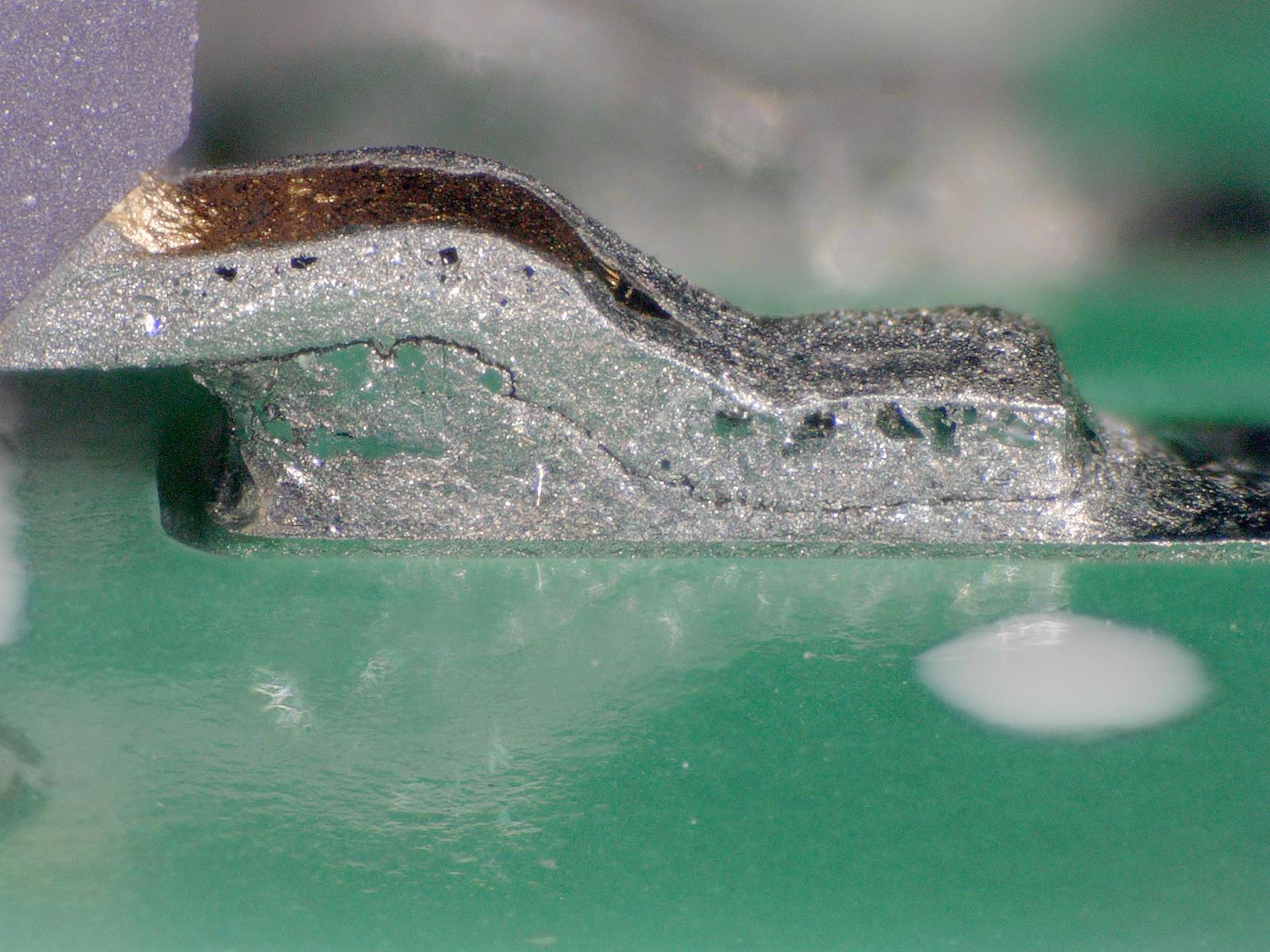
- Bond wire failures
- Die cracking
- Package delamination
- Corrosion and contamination
- Die attach defects
- Solder fatigue
- Metallization defects
- Process-induced manufacturing defects
- Thermal overstress
- Mechanical stress damage
What analytical techniques are commonly used in failure analysis?
Depending on the suspected failure mechanism, engineers may utilize:
- Electrical Bench Testing
- I-V Curve Tracing
- X-Ray Inspection
- Acoustic Microscopy (CSAM)
- Detailed Optical Inspection
- Decapsulation
- Cross-Section Analysis
- Scanning Electron Microscopy (SEM)
- Energy Dispersive Spectroscopy (EDS)
- Emission Microscopy (EMMI)
- Bond Pull Testing
- Ball Shear Testing
- Construction Analysis
Each technique provides unique information that contributes to the overall root cause investigation.
What is the difference between failure analysis and reliability testing?
Reliability testing evaluates how a device performs under environmental and operational stress conditions over time. Failure analysis begins when a failure occurs and focuses on determining why it happened. Together, these disciplines help manufacturers improve product quality and long-term reliability.
How does failure analysis help improve semiconductor yields?
By identifying recurring defect mechanisms and process-related issues, failure analysis provides valuable feedback to engineering and manufacturing teams. This information enables process optimization, defect reduction, improved process control, and ultimately higher production yields.
Can failure analysis support advanced packaging technologies?
Yes. Advanced packaging technologies such as 2.5D integration, 3D packaging, chiplets, flip-chip assemblies, and heterogeneous integration introduce new failure mechanisms and reliability challenges. Advanced failure analysis techniques help evaluate interconnect integrity, thermal performance, package construction, and assembly quality in these complex devices.
Is failure analysis destructive?
Some failure analysis techniques are non-destructive, while others require physical modification of the device.
Non-destructive methods include:
- Optical Inspection
- X-Ray Inspection
- Acoustic Microscopy
- Electrical Testing
- I-V Curve Tracing
Destructive methods may include:
- Decapsulation
- Cross-Sectioning
- Delayering
- Material Removal
Engineers typically begin with non-destructive methods before proceeding to invasive analysis.
What should companies look for in a semiconductor failure analysis partner?
An experienced failure analysis partner should offer:
- Comprehensive analytical capabilities
- Semiconductor packaging expertise
- Advanced microscopy and materials analysis tools
- High-reliability industry experience
- Fast turnaround times
- Detailed reporting and root cause documentation
- Support for aerospace, defense, medical, automotive, and industrial applications
Selecting the right partner ensures accurate root cause identification and meaningful corrective actions.
Advanced IC Failure Analysis is a critical tool for understanding semiconductor failures, improving reliability, and maintaining product quality in increasingly complex electronic systems. By combining electrical, physical, and material analysis techniques, engineers can quickly isolate defects, identify root causes, and implement corrective actions that strengthen product performance and reduce long-term risk. Whether supporting qualification, manufacturing, or field-return investigations, failure analysis provides the insight needed to keep semiconductor programs moving forward with confidence.
